Blog · Evidence & value ·
10 med spa treatments where the price can outrun the evidence
IV drips, B12 shots, PRP, HydraFacial, thread lifts, CoolSculpting and RF microneedling: what the studies actually show, what they do not, and what to ask before paying.
By Med Spa Cost · Editorial policy and review status
A treatment can be safe, popular and still a poor use of money. Those are different questions. This guide grades the evidence behind ten med spa treatments that are often sold with confident claims, then shows what to ask before you pay. It is not a list of “scams”. Some of these are reasonable choices for the right person. The problem starts when the marketing promises more than the evidence can support.
How to read the evidence labels
- Established: consistent controlled evidence or regulatory approval for a specific use. Risks can still exist.
- Moderate: several studies point the same way, but protocols vary or the average effect is modest.
- Limited: small, uncontrolled, short-term or indirect studies. That does not prove a treatment fails; it means the claim is ahead of the evidence.
- Situation-specific: works for a diagnosed problem, but not for the general wellness use often advertised.
- Regulatory concern: the product itself is unapproved, illegally marketed or linked to serious adverse events.
The ten at a glance
| Treatment | Evidence for the usual pitch | What changes the value |
|---|---|---|
| IV vitamin drips | Limited | A diagnosed deficiency or medical indication, not general wellness |
| B12 shots for energy | Situation-specific | A confirmed deficiency or malabsorption problem |
| Exosome injections | Regulatory concern | An FDA-reviewed clinical trial with an IND; there are no approved products |
| PRP for hair loss | Mixed | Protocol, number of sessions, comparison with cheaper proven options |
| PRP facial | Limited | Whether the effect is modest and temporary enough to justify the series |
| HydraFacial | Limited | Surface hydration and glow rather than structural change |
| PDO thread lift | Limited durability | Immediate effect, complication risk and how long it really lasts |
| CoolSculpting | Moderate, modest | Focal fat reduction, not weight loss or a substitute for a healthy weight |
| RF microneedling | Moderate | Device, settings, number of sessions and provider experience |
| Chemical peels | Depends on depth and goal | The specific agent, indication, skin type and who performs it |
Swipe the table sideways to read all three columns.
1. IV vitamin drips
Marketed for: energy, immunity, detoxing, hydration and “cellular support”.
What the evidence supports: intravenous vitamins have a role when someone cannot absorb or eat normally, or has a serious deficiency. A 2023 review in the Drug and Therapeutics Bulletin found a lack of high-quality evidence that high-dose vitamin infusions are necessary or beneficial in people without a specific deficiency or medical condition. It also warned that high non-physiological doses can cause harm. Mayo Clinic reaches a similar conclusion for general wellness use.
The value question: have you been tested for the deficiency this drip is meant to correct, and what does the infusion contain that a much cheaper oral treatment or a normal diet cannot provide? If the answer is “nothing specific”, you are buying an expensive infusion and a needle, not a proven health outcome.
Compare published IV therapy prices.
2. Vitamin B12 injections for energy
Marketed for: fatigue, low energy, weight loss and a general “boost”.
What the evidence supports: B12 replacement is effective and necessary for a diagnosed deficiency, especially when absorption is impaired. In people without a deficiency, a 2021 systematic review and meta-analysis found no evidence that B12 improved cognitive function or depressive symptoms, and the evidence for idiopathic fatigue was too thin to support a general energy claim. Cleveland Clinic makes the same distinction: benefit when B12 is low, little evidence when it is normal.
The value question: was your B12 actually low, and was the cause investigated? If not, the shot may be treating a feeling rather than a deficiency.
Compare published B12 injection prices.
3. Exosome injections
Marketed for: skin rejuvenation, hair growth, healing and “regeneration”.
What the evidence supports: the FDA has stated that there are currently no FDA-approved exosome products. It has issued repeated safety notifications and warning letters over unapproved exosome and stem-cell products, including reports of serious adverse events. A clinic claiming that exosomes are outside drug regulation is not describing the FDA’s position.
The value question: if you are considering an unapproved product, ask for the FDA-reviewed investigational trial, the IND number and the consent process. A menu listing is not evidence of approval. This is one category where the correct answer is often not a lower price but a different treatment.
4. PRP for hair loss
Marketed for: thicker hair and less shedding, usually as a series of injections.
What the evidence supports: this is not a no-evidence treatment. A 2023 meta-analysis of nine randomised trials with 238 patients found PRP increased hair density at three and six months compared with placebo, but did not significantly improve hair count or hair diameter. A 2025 comparison with topical minoxidil found no clear advantage for PRP in hair density, terminal hair count or moderate-to-high regrowth. Preparation methods and treatment schedules vary widely.
The value question: compare the total cost of a full series and maintenance with the cheaper, better-studied alternatives, and ask how success will be measured. “Some improvement” is not the same as a meaningful change you can see.
Compare published PRP hair restoration prices.
5. PRP facial and “vampire facial”
Marketed for: collagen stimulation, glow, fine lines, pores and under-eye rejuvenation.
What the evidence supports: a 2023 systematic review found eleven of twelve studies reported improvement, but many outcomes were subjective and protocols were not standardised. A separate 2019 review found modest, temporary improvement in skin texture and lines, with the effect typically under half of what a clinician might grade as improvement. The evidence is not strong enough to promise a filler-like change or a permanent result.
The value question: is the clinic charging for PRP as an add-on to microneedling, or as a premium standalone treatment? Ask what the PRP is doing that the microneedling or another evidence-based treatment is not. If you are paying several times more for a modest, temporary effect, the price is the problem.
Compare published PRP facial prices.
6. HydraFacial
Marketed for: deep cleansing, hydration, extraction, glow and clearer pores.
What the evidence supports: the literature is small. A 12-week study of twenty people with mild to moderate acne found improvement after six treatments, but it was open-label, so patients and investigators knew what was being tested. A 2024 imaging study of eight people found immediate surface hydration and smoothness after hydradermabrasion, with no visible difference in collagen quantity or quality at two weeks. That supports a temporary surface treatment, not a structural rejuvenation claim.
The value question: what result are you buying? If it is a pleasant clean and a short-lived glow, compare the price with a simpler facial or at-home routine. If you were promised collagen rebuilding or permanent pore change, the evidence is not there.
Compare published HydraFacial prices.
7. PDO thread lift
Marketed for: a non-surgical facelift, jawline definition and immediate lifting.
What the evidence supports: a 2025 systematic review found an immediate lifting effect, but long-term efficacy data were lacking. A 2026 multicentre review of 2,000 PDO thread lifts reported an overall complication rate of 12.4%. The most common problems were skin retraction, asymmetry and pain. That does not make the procedure illegitimate, but it means the result is not a facelift and the risk is not trivial.
The value question: how many threads, what type, who will place them, what happens if one becomes visible or infected, and how long the clinic can show the result lasting? A lift that needs repeating sooner than advertised can cost more than the cheaper-looking first appointment suggests.
Compare published PDO thread prices in New York City.
8. CoolSculpting
Marketed for: freezing stubborn fat and “body contouring”.
What the evidence supports: this is a real but modest effect, not weight loss. A 2025 meta-analysis of 30 studies and 3,158 participants found reductions in abdominal circumference and fat thickness at about three months, with an 80.4% satisfaction rate but a relatively high rate of minor side effects such as numbness, redness and swelling. A large real-world review found paradoxical adipose hyperplasia, a serious enlargement of the treated area, in roughly 0.018% to 0.048% of cycles.
The value question: are you trying to change a specific pinchable area while your weight is stable, or are you hoping to lose weight? If it is the second, the treatment is being sold against its evidence. Ask about the number of cycles, expected change in the treated area and the revision policy.
Compare published CoolSculpting prices in Los Angeles.
9. RF microneedling and Morpheus8
Marketed for: skin tightening, texture, acne scars and a “non-surgical lift”.
What the evidence supports: the evidence is stronger than for many devices. A 2026 systematic review of 22 studies found consistent improvements in skin texture and tightening, with high patient satisfaction and mostly mild, transient side effects. A broader review of 41 studies found credible efficacy across acne scars, laxity and photoaging. The catch is heterogeneity: devices, needle depth, energy settings and treatment intervals differ, and the studies do not show that every expensive package is equivalent.
The value question: compare the device, the number of passes and sessions, and the provider’s experience, not just the brand name. RF microneedling can be a reasonable upgrade over standard microneedling for laxity, but the premium should buy measurable technique, not a logo.
Compare published Morpheus8 prices.
10. Chemical peels
Marketed for: acne, pigmentation, fine lines, glow and “skin resurfacing”.
What the evidence supports: the result depends almost entirely on the agent, concentration, depth and indication. The American Academy of Dermatology notes that multiple peels may be needed and that results are not permanent because skin continues to age. Superficial peels can improve texture and pigmentation, but evidence for acne is less clear, and deeper peels carry more downtime and risk. At-home high-strength peels have caused serious burns and scarring; the FDA advises using chemical peels only under the supervision of a trained provider.
The value question: which peel, at what strength, for which problem, and who is applying it? A chain’s cheapest “peel” and a dermatologist’s medium-depth peel are not the same product. Ask what will happen if you pigment or scar, especially if you have a darker skin tone.
Compare published chemical peel prices.
The strongest cases are usually the least exciting
The treatments with the clearest evidence are not immune to bad pricing, but their core claims are easier to defend. Botox and other neurotoxins have approved uses and a predictable temporary effect. FDA-approved dermal fillers have specific approved indications and known risks. Laser hair removal has a well-established mechanism and predictable need for multiple sessions. The question there is not “does this ever work?” but “what dose, product, area and provider are included in this price?”
That is why we link every article back to the clinic’s published price and still tell you to check the details. A real treatment can be badly sold. A weak evidence base can also sit behind a very polished website.
Seven questions to ask before you pay
- What specific outcome is this treatment supposed to produce, and how will we measure it?
- What does the strongest independent evidence show for this use, not just for the device or ingredient?
- Is the quoted price for one session, a full course or a maintenance plan?
- Who will perform it, what are their credentials, and who handles complications?
- What are the common and serious risks, and what is the revision or refund policy?
- What cheaper or better-studied alternative should I compare it with?
- If this is an unapproved product, where is the FDA-reviewed trial and consent process?
Use the price data as a starting point, not a verdict
Our city pages show what clinics publish for each treatment, including the conditions attached to a price. They cannot tell you whether a treatment is right for you, and a higher price does not buy stronger evidence. Use the price pages to narrow the shortlist, then ask the questions above before you book.
For a Botox-specific estimate, use our unit and total-cost guide. For the general method behind every price on this site, read the price methodology.
Watch and compare
Third-party videos, not reviewed or endorsed by Med Spa Cost. They open on YouTube, so no video request is made until you click.
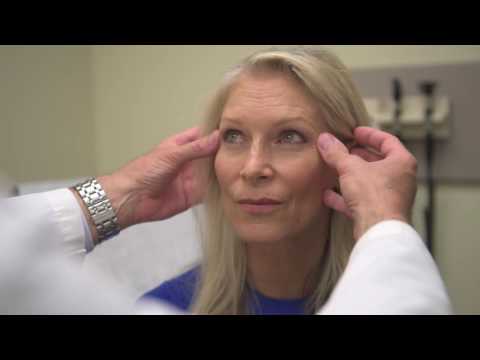 Botox injections: what to expectUCI Health · A board-certified plastic surgeon walks through the appointment and the risks patients should understand.University health-system education. Published in 2016; clinical practice and prices may have changed.
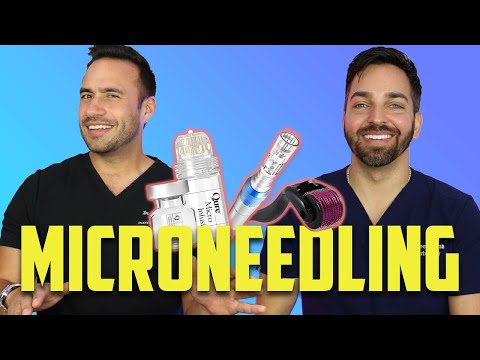 Is microneedling worth the hype?Doctorly · Two dermatologists compare professional microneedling, dermarolling and micro-infusion devices.Doctorly discloses consulting work for a device brand. Watch the commercial context, not just the conclusion.
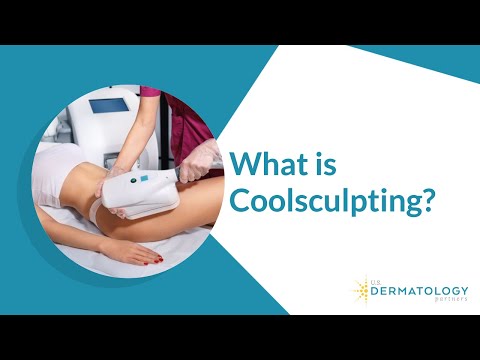 What is CoolSculpting?U.S. Dermatology Partners · A dermatology group explains how cryolipolysis is performed, who it is for, and what the appointment is like.Published by a practice that sells the treatment.
Compare published prices
- Botox: Chicago, Dallas–Fort Worth, Los Angeles, Miami, New York City, San Diego, San Francisco Bay Area
- B12 / vitamin injection: Chicago, Dallas–Fort Worth, Miami, San Diego, San Francisco Bay Area
- PRP hair restoration: Chicago, Dallas–Fort Worth, Los Angeles, Miami, San Diego, San Francisco Bay Area
- PRP / PRF facial: Chicago, Dallas–Fort Worth, Los Angeles, San Diego, San Francisco Bay Area
- HydraFacial: Chicago, Dallas–Fort Worth, Los Angeles, Miami, New York City, San Diego, San Francisco Bay Area
- PDO thread lift: Chicago, Dallas–Fort Worth, Miami, New York City, San Diego
- CoolSculpting: Dallas–Fort Worth, Los Angeles, New York City, San Diego, San Francisco Bay Area
- Morpheus8: Chicago, Dallas–Fort Worth, Los Angeles, Miami, New York City, San Diego, San Francisco Bay Area
- Chemical peel: Chicago, Dallas–Fort Worth, Los Angeles, Miami, San Diego, San Francisco Bay Area
- Microneedling: Chicago, Dallas–Fort Worth, Los Angeles, Miami, New York City, San Diego, San Francisco Bay Area
- IV therapy: Chicago, Dallas–Fort Worth, Los Angeles, Miami, New York City, San Francisco Bay Area
Sources
- Intravenous vitamin injections: where is the evidence? Drug and Therapeutics Bulletin, 2023
- Mayo Clinic Press: IV vitamin therapy and the lack of proven benefit in healthy people
- Effects of vitamin B12 supplementation on cognitive function, depressive symptoms and fatigue: systematic review and meta-analysis, 2021
- FDA public safety notification on exosome products
- PRP for androgenetic alopecia: systematic review and meta-analysis of randomised trials, 2023
- PRP versus topical minoxidil for androgenetic alopecia: systematic review and meta-analysis, 2025
- PRP use in facial rejuvenation: systematic review, Plastic and Reconstructive Surgery, 2023
- PRP for skin aging: systematic review of safety and effectiveness, 2019
- HydraFacial Clarifying Treatment for active acne: 12-week multicentre study, 2022
- Hydradermabrasion under line-field confocal OCT: 8-participant imaging study, 2024
- Update on absorbable facial thread lifts: systematic review, 2025
- Complications after PDO thread lift: 2,000-case multicentre cohort, 2026
- Cryolipolysis health outcomes, adverse events and satisfaction: systematic review and meta-analysis, 2025
- Real-world cryolipolysis safety in 3,262 patients and 18,203 cycles, 2025
- Radiofrequency microneedling for facial rejuvenation: systematic review, 2026
- Radiofrequency microneedling across dermatological conditions: systematic review, 2026
- American Academy of Dermatology: chemical peels overview and FAQs
- American Academy of Dermatology: questions to ask before a cosmetic procedure